Showing posts with label Europe. Show all posts

The different outfits of Manneken Pis


Along the streets leading away from Brussels’ majestic Grande Place (or Grote Markt), one finds several waffle shops and chocolatiers, the buttery and sweet scents wafting through the streets. Yet, in a very insignificant street stands Brussels’ famous icon, relieving himself in front of all to see. Yes, the little Manneken-Pis (literally meaning Little Man Pee) has been urinating on the street corner for the past few hundred years. Although the original statue is kept in the Maison du Roi or Broodhuis (situated on the Grande Place), the replica (which was placed there in 1965) is still entertaining to observe, with his never ending stream of water splashing in the fountain below. But to me, the best part of this little laughing boy entertaining the flocks of people crowding around him, trying to get a picture of him AND them together, is not only the reaction of people spotting him for the first time, but his attire.
Manneken-Pis in a very cute outfit - see how tiny he is!? In this photo and the photo below he is dressed in horse riding gear (he is a Cavalier of the Cercle Royal d'Oxer - Royal riding academy)


But before I begin, let me first share a few of the legends about the origin of Manneken Pis;

One states that in the 12th century Duke Godfrey III of Leuven was taken to battle along with his troops and was placed in a cradle and hung from an oak tree in order to bring the troops good luck and to encourage them. He then urinated onto the enemy. Duke Godrey’s troops eventually won the battle. To commemorate their victory the oak tree was taken and planed in the street of the same name (Rue du Chene/Eikstraat) and a statue of the little boy was erected.

Another says that in the 8th century , Vindicien, Bishop of Arras, came to preach in Brussels. The local lord invited the Bishop to stay with him – his alterior motive being that he wanted the Bishop to pray and intercede with God on his behalf in order for him to have a male heir. Nine months later a baby boy was born whose first act was to “pee so high” that it hit the Bishop’s beard. Before the baptism of the baby boy after a quarrel with one Gudula (who later became a Saint – the Our Lady Cathedral in Brussels is named after her) the future saint punished the father of baby boy by saying “Your only son will grow no bigger and will never stop peeing”.

And my preferred legend : In the 14th century when Brussels was under siege, a little boy, Julianske, caught sight of the enemy preparing to place explosive charges at the city walls. The little boy then urinated on the burning fuse, saving the city from destruction.

On 11 October Manneken Pis wore a yellow ribbon around his eyes, reading "Lumière pour le monde" (light for the world), for World Sight Day. 

Now, for his outfits…


Many embassies, sister cities, artists, workers and worker unions, sportsmen and so forth have given miniature outfits, suits or costumes to “honour” the little boy. Today the little statue has more than 800 outfits! Most of them are displayed in the City Museum of Brussels (on the Grande Place). The Friends of Manneken Pis posts a schedule of when he is going to wear different outfits on the gate in front of the statue. They are also responsible for dressing him, usually to the loud music of a brass band playing exciting melodies. He is usually dressed in some attire during festivities and days that honour various worksmen, such as firefighters, policemen etc. There is even a Nelson Mandela outfit and a fantastic South Africa outfit, equipped with gumboots and a hard hat. There’s an Elvis outfit, a Canadian Ice Hockey player, an Obelix outfit (from Asterix and Obelix) and several different quirky and traditional ones.
Manneken Pis as St Niklaas (Saint Nicholas, who became known as Santa Claus). 

Manneken Pis wearing a fire fighter outfit
Manneken Pis as St Niklaas

A festive fire fighter


Close Up of Manneken Pis dressed in traditional equestrian gear. 

An exciting day in Brussels is during Saint Verhaegen celebrations, where the students of the ULB and VUB (Université Libre de Bruxelles, a French speaking university and Vrije Universiteit Brussel, it’s Flemmish speaking counterpart) have a procession along the streets of Brussels in their traditional university attire (basically they just have an excuse to party and drink beer, something which the Belgians tend to do a lot – I don’t think most of the students even know what the reason behind Saint-V day is!). The students are dressed in large-billed caps, white doctors’ jackets scribbled over with messages from friends and they usually walk around, begging for beer money. You see them throwing each other with beer and food, hence the not so clean jackets. But what does this have to do with Manneken-Pis? Well, on this day he is dressed not only in the students’ attire but he pees beer! Yes, real authentic Belgian beer! Sometimes it squirts out over the fences, soaking the students, all raising their hands to catch some of the beer. And all the while a band joins the festivities playing their loud music for the laughing boy peeing beer! Young and old join together in the festivities. It is very entertaining to see!

Manneken Pis wearing a traditional ULB/VUB outfit

The ocean of heads before the little boy's statue


Manneken Pis as a VUB student (above)
Festive students, old and young (below)

So, have you seen Manneken-Pis and what is your impression of him? Do you like him or don’t you see why everybody is going crazy about him? And if you have seen him dressed up, what did he wear? Or what is your favourite Manneken-Pis outfit?

Where to find him: 46 Rue de l’Etuve/ 46 Stoofstraat (on the corner of Rue de l’Etuve and Rue du Chene/Eikstraat) If you stand on the Grande Place, facing the City Hall or Hotel de Ville (the building with the big tower), take the left side street passing by the City Hall (Rue Charles Buls/Charles Buls straat). (There will be a statue of Everhard 't Serclaes on your left – if you rub the golden statue, you will supposedly get good luck!) Continue straight with the street. You’ll know you are near Manneken Pis because of 1) the tourists flocking to see the little boy 2) there is a pedestrian street (no cars allowed) and 3) you will see a big blue Tin Tin Mural prancing on the right hand side.

Below are a few photos of vintage postcards that I couldn’t resist to buy (€8 for 20)
from the Brussels City Museum. Absolutely adorable!
Manneken Pis Postcards


This one is probably my favourite! 

In frosty weather, Madam, that's all you get to see(above)
There is but Brussels to supply us with such showers(below) - Brussels is known for its rainy weather


Memoirs of Paris: A Tour - Part I (and a delicious Baguette Recipe)


As the Thalys train started to slow, I cannot help but to sing Edith Piaf’s La vie en Rose in my head, the slow, jazzy tune of the trumpets singing of a past classical romance. And so I have come to rekindle my past romance. Not with my dearest husband sitting next to me, quizzically trying to figure out the answer to a crossword puzzle, but with Paris, the place I call my heart’s home.

Upon arrival at Gare du Nord we are greeted with the familiar Parisian dialect; not the Belgium Flemish and “ch’tis” French I’ve grown so accustomed to. We quickly catch a metro and find our way to our beautiful room in our hotel next to the lush Jardins du Luxembourg. The building, like so many old French buildings, has the most elaborate stucco on the ceiling and greets your ears with soft creaks of footsteps on wooden floors. After settling down we immediately set out in the direction of the Notre Dame. This weekend, I am the navigator as Paris feels to me like my old familiar home. We decided that this weekend we are going to spend time in the old familiar places and just wander around, enjoying the Parisian atmosphere.

The Pantheon 
First stop, the Pantheon, situated (close to the Jardins du Luxembourg) in the Latin Quarter. The Pantheon’s facade is modeled on the Pantheon in Rome and today it is used as mausoleum. It was originally built as a church for the patron saint of Paris, St. Genevieve. The Pantheon is one of those buildings that just, once again, emphasizes our minuscule size in the world but reminds us how we have the ability to make a big impact on it, none the less. Many notable people are interred and buried here, including Voltaire, Emile Zola, Louis Brailles and Victor Hugo. Foucault, the French physicist’s famous swinging spherical pendulum was first demonstrated here and a copy of which can still be seen inside. Strangely enough, after rummaging through my old photos from my first visit to the city, I found that I took a very similar photo back then and then during this visit. (The first photo is from my visit in 2007, where a friend and I “accidentally” discovered the Pantheon from below the hill. The second photo is from my visit in 2012 where we passed through this street to get to the Notre Dame.)

My first sighting of the Pantheon (2007)

Leaving the Pantheon to go to the Notre Dame (2012)

From the Pantheon it is best to walk through the city to go to the Ile de la Cite, which hosts the beautiful Notre  Dame de Paris, simply known as the Notre Dame. I truly believe that the best way to see a city is on foot, for it allows you to see and experience so much more. One can smell the different scents, and hear the different sounds of the city. A quick and easy way to travel is, of course, the Paris Metro. A carnet (consisting of 10 tickets) can be bought at a slightly reduced rate and can be used for 10 single trips. The metro stops nearby most of the famous Parisian attractions. If you are staying for 5 days or more, the Passe Navigo can be bought at all RATP/SNCF ticket windows at the metro stations. This pass can be used to travel as much as you like on all the Paris Metro lines and the RER network, however it can only be activated on weekdays, which would be problematic if you arrive on a weekend.
The Notre Dame (front entrance and entrance to the  treasury)

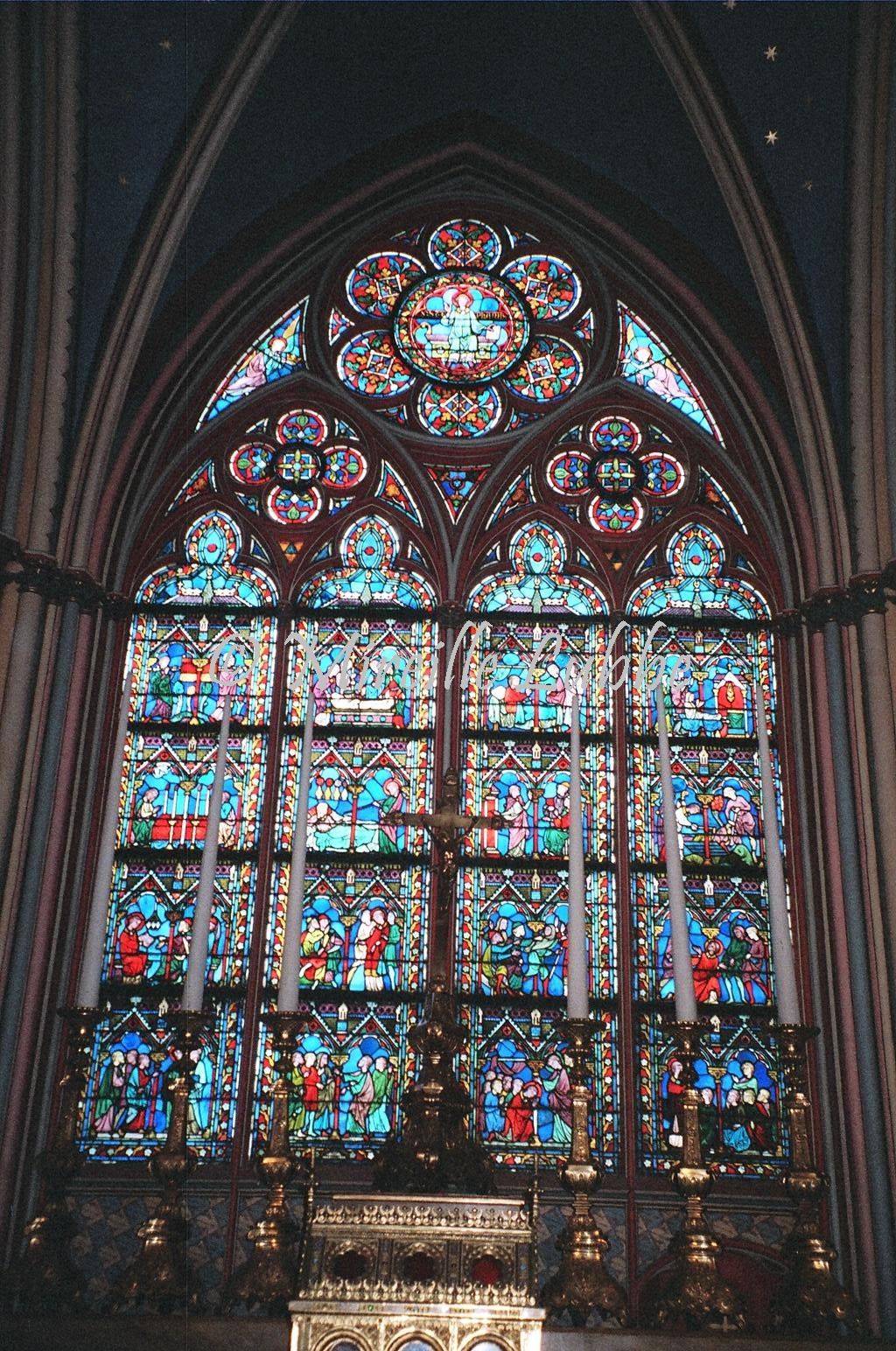
The Notre Dame was built in a French Gothic style and construction began in 1160. Gothic elements creep from every crevice of the cathedral, most notably the gargoyles looming over the spires, maliciously spitting streams of rainwater onto the ground. It is possible to view the cathedral’s gargoyles up close when taking a tour of the towers, which includes climbing about 400 steps, for a fee of € 8,50 for adults. (Note: the cathedral is currently undergoing some renovation and not all the towers will be accessible. The monument itself will be closed from 19 February 2013 to 10 March 2013, except on weekends.) From the tower a beautiful view of Paris awaits. The cathedral’s treasury is also worth visiting for its various religious relics, most notably the crown of thorns, a piece of the cross and a nail from the cross. The entrance fee to the treasury is €3,00 (the entrance to the treasury is in front of the cathedral, and not in the cathedral itself.). Entrance to the Cathedral is free and it is worth the visit. It boasts with beautiful sculptures, stained glass windows and artworks.

Notre Dame

Beautiful Windows

The Cathedral's famous windows

Arch above one of the front entries

The cold and fog came creeping up from the Seine and nudged us to the Left Bank, where we visited the famous Shakespeare and Company bookstore, which is worth a visit for any literary lover. Here you can find English books lined on wooden bookshelves, hidden away in narrow passages. You can get the famous Shakespeare and Co stamp in your book upon purchase. The shop next to the English bookshop sells collectors books, such as signed copies and first prints. The store is named after the original Shakespeare and Company, famous for being the hangout place for writers such as Ezra Pound, James Joyce and Ernest Hemmingway, which unfortunately closed during the German occupation of France during World War II.
Paris has so many famous monuments which we were eager to visit again, but our bed was beckoning us to get a good night’s sleep before embarking on our second day’s “monument hopping tour”. We enjoyed a hearty dinner in the comfort of our bed and soon drifted away, the lights of the Eiffel Tower swaying across the orange clouds cast across the horizon.

The famous Shakespeare and Company

Below I share a recipe inspired by one of the most delicious baguettes I’ve had in Paris.

Portobello mushroom, Roquefort and caramelized onion baguette
(Serve with a warm soup of your choice, such as French Onion Soup or Vegetable soup)

Ingredients:
Two large Portobello Mushrooms, cleaned and stems removed
Balsamic Vinegar
Olive Oil
Butter
½ teaspoon dried basil
½ teaspoon dried oregano
½ teaspoon dried sage
(or substitute the above herbs with an Italian Herb mix)
¼ teaspoon dried garlic flakes
Slices of Roquefort (or any blue cheese of your choice)
2 Onions
Brown Sugar
Baby Spinach leaves
Salt

1.       Place the mushrooms in a deep bowl. Cover with olive oil and add about 4 table spoons of Balsamic Vinegar. Add the Basil, Oregano and Sage (or the Italian Herb mix) and the garlic.  Rub the mushrooms in the mixture and set aside.
2.       Meanwhile, prepare the caramelized onions by peeling the onions. Halve the onions and slice them lengthwise. Melt some butter in a thick bottomed pan. Lower the heat and add the onions, add some salt and sauté.  Once the onions are becoming transparent, add some brown sugar and a little bit of Balsamic vinegar (one table spoon of vinegar for every two table spoons of sugar). Allow the onions to caramelize over low heat, stirring frequently until the sugar has dissolved. Allow to cool.
3.       In a separate pan, heat some olive oil and add the marinated mushrooms and the rest of the marinade. Cook the mushrooms on medium heat, while frequently stirring, for about five minutes. Allow to cool.
4.       Prepare the baguette by slicing it lengthwise, adding some butter. Add the baby spinach leaves. Top the leaves with the Portobello mushrooms and add the caramelized onions. Drizzle the mushrooms with some of the caramel residue of the onions. Top with the slices of Roquefort and serve with a warm soup.


Have you tried this recipe? Do you like french sandwiches or baguettes? And have you ever been to Paris?


Oostende - a popular sea side resort in Belgium


There is this small seaside town in Belgium, called Oostende. It actually reminded me of a British sea-side town, possibly because the weather was so miserable when we went there.  It is a rather lovely place, with many sea-side restaurants and a long boulevard that stretches out next to the beach.
An old Victorian building that stretches out along the beach. It is being renovated to its former glory - with a hotel, restaurant and a few shops. It will be beautiful to see it when the project is complete. 


What is there to see and do in Oostende?

Oostende doesn’t really offer a lot of grandiose architecture or spectacular museum. But the town is a very popular beach resort.

Colourful beach sport
There is a Casino as well as a horse track (the latter being eerily empty whilst we were there).
Casino, Oostende
Oostende Kursaal (Casino)

There are several nice restaurants along the pier and boulevard, all serving traditional moules-frites (mussels and fries) and of course, Belgium beer.  Close to the station, there are several food stalls selling fresh fish and fruits de la mer (mussels, crab, crayfish etc). We stopped to buy a nice lunch consisting of different types of fish. It made for a tasty, light lunch! Like I always say, you cannot go to the sea without eating seafood!

There is an interesting old ship, the Mercator, now a floating museum, docked in the harbor. The ship, named after a Flemish cartographer, Gerardus Mercator, was built in 1932 and used to be a training ship for the Belgian merchant fleet, a Belgium ambassador on World Fairs and she even competed in sailing events (and she won the 1960 Oslo-Oostende tall ships race). The ship isn’t as impressive as, say, the HMS Victory in Portsmouth (but then again, I don’t think many ships are!), but it is nice to go on board and catch a glimpse of how people would’ve lived on board during more “modern” times.
Mercator

Oostende Harbour

Then there is a beautiful old church, which, ironically, like most other churches in Belgium, is closed on a Sunday. The Sint-Petrus-en-Pauluskerk (Church of St Peter and St Paul) was built in 1899 and completed and consecrated in 1908. The original stained glass windows were destroyed during the two World Wars, but fortunately they were eventually replaced.
Sint Petrus en Pauluskerk

There is even an aquarium, which is probably as big as my bedroom in South Africa! It hosts fish, mollusks and crustaceans from the North Sea.

There is a very interesting art display on the pier!
Artwork on the Pier

And there is a lovely, colourful park.
Mermaid in the Park


There are several museums and chapels in the town. I can see that it becomes really crowded during the summertime. Either way it makes for a great day trip during autumn! Just be armed with a warm cup of coffee and some warm waffles when the weather acts up!

Have you ever been to Oostende? Do you like popular sea-side towns?

The disturbing side of Milan’s Cathedral


During our trip to Milan, we came across one of the most bizarre things I have ever seen. While touring the Duomo di Milano (or the Cathedral of Milan) I was instantly blown away by the size of the cathedral (it is the fourth biggest cathedral in the world and it is the biggest in Italy).
Duomo di Milano

The church was truly impressive, until I realized that something, which disturbs me even now, was being openly displayed to the public.

What's that down there?

What is that you see below the grandiose statue? Nothing really… just the sarcophagus of a previous arch bishop, his bony, sinewy hands and neck exposed for the world to see!

A little bit freaky, to say the least! Especially that grey-ish gloveless hand resting on his white cloak.

I only took these photos displayed in the blog (for blogging purposes), because I found it rather macabre to stare and photograph a corpse. It is such a shocking sight though – in this holy place entwined with beautiful architecture and art are all these bodies gradually rotting away for all the public to see. I don't think it's really respecting the wishes of the dead to "Rest in Peace", now is it?


The sarcophagi start with the oldest one which is a pile of bones dressed in white cloth… but then it gets creepier as the sarcophagi get “younger”. Some of them wear silver masks, others' faces are exposed with skulls grinning from within their glass coffins.

There is also a crypt of Charles Borromeo who used to be the Cardinal Archbishop of Milan but who has been canonized and is now a saint. People can come from all over the world to see the body of this saint – which doesn't seem saintly at all. And it is rather sad to think that everyone is ogling this corpse after he insisted that he should not be canonized nor embalmed after his death! 

To contribute to the eeriness is a statue of Saint Bartolomeo, who was flayed. The statue depicts the saint with his skin dressed around him like a toga. Rather macabre.

St Bartolomeo the flayed

The cathedral isn’t just eerie; it does offer a lot to see. There is a red light in the apse of the church where the supposed nails of the cross on which Jesus Christ was crucified, is kept. The Nail of the Cross is retrieved every year during the Rite of Nivola, where the public can see the nails.

Beautiful artworks along the nave. If you look below the cross, you'll see a red  dot - that is where the Nail of the Cross is kept.

During November (when we visited the cathedral), there are beautiful artworks being displayed along the nave. And the architecture itself allows one’s eye to see various intricate elements all over.


The cathedral is truly beautiful and amazing to see. Perhaps the sarcophagi contribute to the dark element of the Gothic style in which the cathedral was built. But in the words of Henry James: it is “a structure not supremely interesting, not logical, not … commandingly beautiful, but grandly curious and superbly rich.”

Have you ever been to the Milan cathedral? What is your opinion of sarcophagi in the modern age? Do you find it fascinating or macabre? 

The Magic of Rome at Night

Rome is a beautiful city during the day, but during the night some of the archaeological as well as popular sights become illuminated and it creates a completely different atmosphere. During our trip to Rome I was instantly impressed by the city's archaeological centre - it immediately evoked memories of all my Latin studies and the history we studied with it. I tried to imagine how the centre would have been, with all the people wearing different togas to signify their social status (like the senators wearing tunica laticlavi - white tunics with purple stripes - or the women's stola worn over her tunic). I could imagine the bustle in the Trajan market, where tavernas were filled with rowdy drunken men and the tabernas were selling their wares. And I imagined the bustle of hungry Roman citizens getting their share of free wheat dispersed from the forum.

Some of the Ruins around the Trajan Forum

The Trajan Forum - it was once believed that the building was a shopping arcade, but later discoveries indicate that parts could have been offices. 

Then, whilst crossing the street to the old Roman Forums, where orators would try and mould the public's opinion, where Triumphs (triumphal military processions) will be held or where the men will do trade and banking, you see magnificent ruins of what would have been, among other, impressive temples. There is the Temple of Vesta (Vesta being the virgin goddess of the hearth, home and family), the complex or housing where the Vestal Virgins lived (the Vestal Virgins were priestesses to the goddess Vesta, one of their main tasks were to never let the fire of Vesta go out), the temple of Saturn and the Temple of Castor and Pollux .

The temple of Saturn 
The temple of Saturn from a different view

Whilst walking to the Colosseum or the Flavian Circus, I could imagine the incredible cheers of the specatators and the thoughts racing through the slaves and gladiators' minds as they approached the magnificent structure, awaiting their fate.

The Colosseum 

I could imagine how the Romans went to worship at the magnificent Pantheon, which still stands today in all it's architectural wonder!

The Pantheon

The Pantheon


Then there is the more modern part of Rome, which is as beautiful and impressive in night as it is during the day. There is the Vittoriano which is made out of pure white marble and hosts impressive statues which, I feel, adds to the mythical atmosphere of Rome. (When you see the statues on the horizon, almost as if floating in the air, it seems as if there are two chariots flying in the sky, guarding Rome!)

The Vittoriano

The Chariots on the Vittoriano as can be seen from the Colosseum - the mist created an eerie atmosphere! 

There is the famous Piazza del Campidoglio which was designed by Michelangelo. It is as beautiful at night as it is during the day. At the back of the Piazza is the famous statue of Romulus and Remus.

The Piazzo that Michelangelo designed - the Romulus and Remus statue (below) is found when walking through the left passage seen in the photo

Romulus and Remus

Then there is the famous Trevi Fountain - where the traditional belief says if you throw a coin into the fountain you will be granted a return trip to Rome! The fountain tells a wonderful story of how the water of original aqueduct that used to stood at this place was found by a virgin and it depicts the theme of Taming of the Water - where the god of all water, Oceanus, is the central figure in the fountain.

Trevi Fountain 

Last, but not least, there is the Bocca della Verita - the Mouth of Truth. It is thought to be part of a 1st Century fountain which possibly depicts the god Oceanus or the god of the river Tiber. But legend goes that if you lie while your hand is in the mouth of the sculpture, it would be bitten off! Fortunately, both Armand and my hands are still intact!
Bocca della Verita! Will we keep our hands or not?!

Rome is a magnificent place if you appreciate archaeological history and if you can allow your imagination to wander you'll be able to see the history and mythology seeping through every Roman stone and wall. And it really becomes even more beautiful at night! 

Have you ever been to Rome? What is your favourite place in Rome?